 ESTIMATES & HIDDEN DAMAGE
An insurance estimate is often a starting point—not the final repair plan. If a shop finds crash damage that could not be seen during the first inspection, it documents the difference and submits a repair supplement for review.
What is a collision repair supplement?
A supplement is an additional repair estimate created after the original estimate. It can include newly discovered damage, required procedures, additional labor, refinishing steps, calibrations, clips or one-time-use parts that were not visible or confirmed earlier.
A supplement is not automatically an “extra charge” invented by the shop. It is a documented request showing why the repair plan needs to change. The insurer may review photos, measurements, invoices and manufacturer repair information, or send an appraiser to reinspect the vehicle.
Visible damage is recorded before major parts are removed.
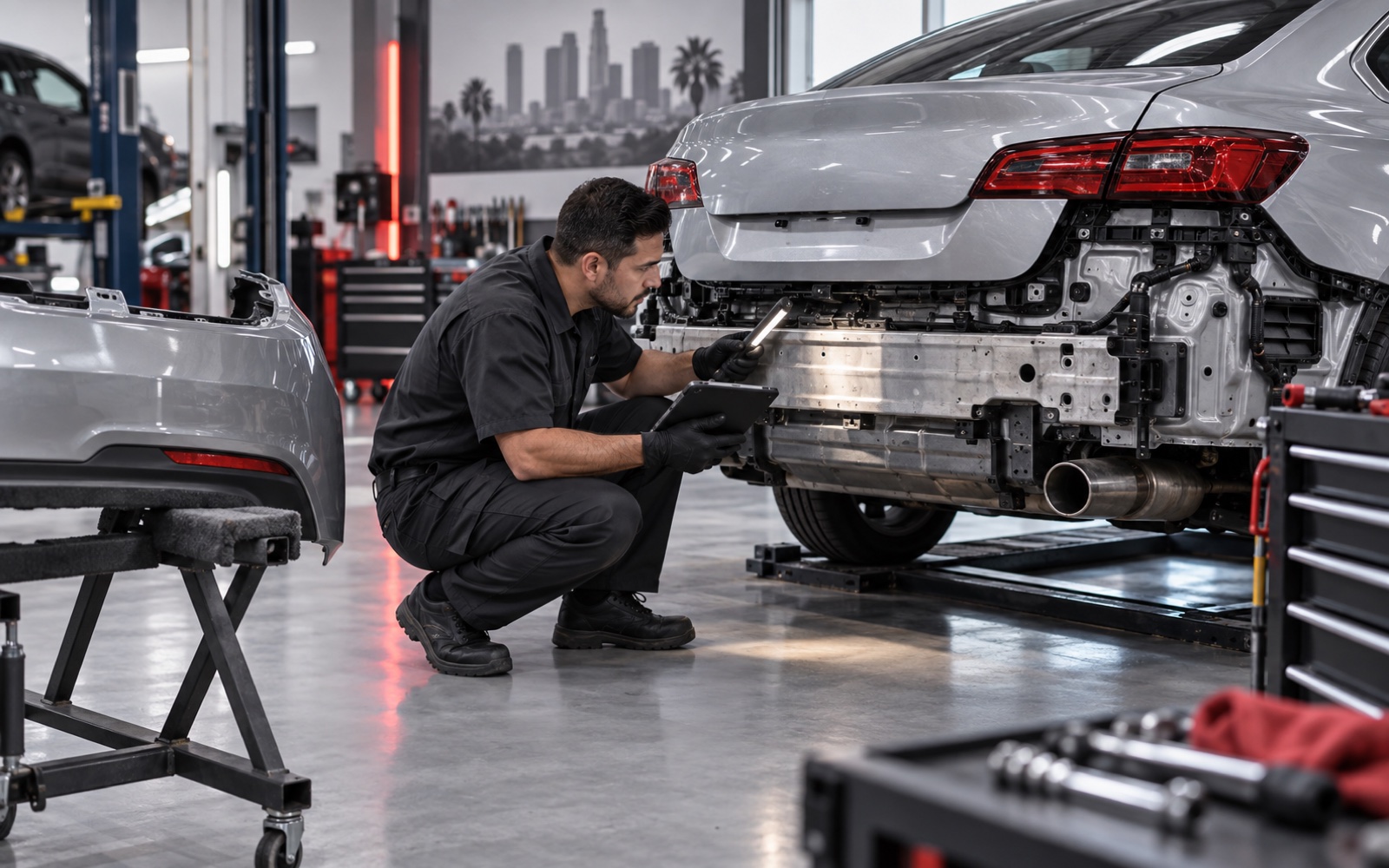
Damaged panels come off and the structure, sensors and mounting points can be inspected.
The shop documents added operations and sends them to the insurer for approval.
Why did the insurance company send a check already?
An insurer may issue payment from its preliminary estimate before the complete scope is known. Receiving that check usually does not mean every repair has been identified. If additional accident-related damage is found, the shop can contact the insurer and request authorization through a supplement.
Before depositing, endorsing or signing anything that appears to settle or release the entire property-damage claim, read it carefully and ask the adjuster what the payment covers. Checks involving a lender or repair facility may have more than one payee.
What hidden damage is commonly found?
- Broken bumper reinforcements, brackets, absorbers and mounting tabs
- Damage behind quarter panels, fenders, doors or trunk trim
- Shifted suspension, wheel-alignment or structural measuring issues
- Damaged radar, camera, parking sensors or wiring
- Required pre-scan, post-scan or advanced driver-assistance calibration
- Corrosion protection, seam sealer, weld or refinishing operations
Will every supplement be approved?
No. The insurer evaluates whether each item is related to the covered loss and whether the amount and procedure are supported. Coverage, exclusions, deductibles, prior damage and policy limits can affect payment. A careful shop separates accident-related damage from wear, unrelated damage or pre-existing conditions and keeps the customer informed.
What should you do if the first check looks too low?
- Choose a qualified repair facility and authorize a complete damage analysis.
- Give the shop the claim number and adjuster contact information.
- Keep the insurer’s estimate and payment explanation.
- Ask the shop to photograph and document newly discovered damage.
- Do not assume you must personally negotiate every line; the shop can submit its documentation, while the insurer makes the coverage decision.
Top Rank Auto Collision can inspect the vehicle, explain the repair plan and document accident-related hidden damage discovered during teardown.
Call (323) 285-0633The California Department of Insurance explains that an adjuster usually writes an estimate from the initial inspection and that, when further damage is found during repairs, the shop contacts the insurer for approval of the additional repair cost. Read the CDI consumer guide.
This article is general educational information, not legal advice or a promise of insurance coverage. Coverage and payment depend on the policy, facts, documentation and applicable law.